Sight Picture Quiz
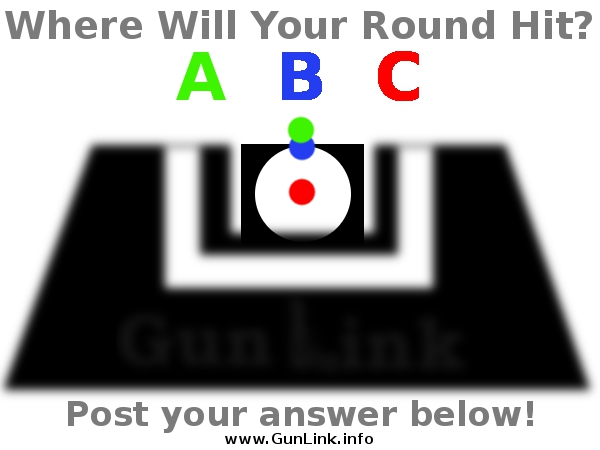
“Equal light, equal height” gives you the right sight alignment, but what about sight picture?
Should your front sight cover your target? Should the top of your sights bisect your target? Or should your target be on top of your sights like a lollipop on a stick?
[poll id=”10″]
New Additions to AAC’s Line of Pistol, Rifle, and Rimfire Silencers
 True to Mike Smith’s (somewhat brash, perhaps) letter earlier this year, Advanced Armament Corp. is not only still open for business with real, live employees, they are continuing to innovate and release new suppressors for centerfire pistols, rifles and rimfire firearms. We got a chance to see them at SHOT Show 2015 and they will be on display to the general public in booth 2033 at next month’s NRA Annual Meetings & Exhibits in Nashville.
Among the new offerings are a couple of neat little pistol suppressors. Filling the void left by the popular-but-discontinued Ti-Rant 9 is the new Illusion 9 with a claimed 33db sound reduction. The Illusion 9’s offset bullet path allows the bulk of the suppressor to hang below the bore axis, freeing up the real estate above the axis to allow the use of factory sights instead of raised suppressor sights. The Illusion also incorporates AAC’s “Assured Semi Automatic Performance” (ASAP) booster which the company claims “ensures reliable pistol operation, allows for zero-shift adjustment, and provides for modularity to support multiple weapons platforms.” The Illusion has an MSRP of $800 and should be available this spring. Continue reading
Shooting for Survival – An FBI Training Film From the 1970s
“Shooting For Survival” is an FBI training film produced by the US Department of Justice circa mid-1970s. This short film presents basic rules for survival against hostile fire including taking cover, shooting from cover and several defensive firearms techniques as they were taught to law enforcement personnel 40 years ago.
2014 NRA National Matches Scheduled for July 6 Through Mid-August
“World Series of Shooting” Returns to Camp Perry
 The National Rifle & Pistol Championships, AKA The National Matches, is a shooting tradition that has been around since 1903 and has been hosted at Camp Perry, Ohio, for 107 of those 111 years. That tradition continues this summer as the 2014 National matches – conducted jointly by the Civilian Marksmanship Program (CMP), NRA and Ohio National Guard – return starting July 6.
During the event, the nation’s top civilian and military marksmen will face off in various categories of competition. The National Matches include the CMP National Trophy Rifle and Pistol Matches, the Pistol and Rifle Small Arms Firing Schools, CMP Games rifle events and the NRA National Pistol, Smallbore Rifle and Highpower Rifle Championships.
Things kick off with the Junior Small Bore Rifle Camp, continuing with various banquets, pistol and rifle championship matches and awards ceremonies, all wrapping up in the second week of August. The full calendar is available online and additional information is available on the NRA Competitive Shooting website.
Online registration for the National Matches is available here. If you won’t be shooting but you would still like to get involved with the 2014 National Matches, the application to volunteer is available here.
Zeroing a Weapon Laser – Constant Offset vs Zeroed For Range
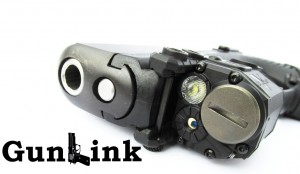 Laser sights can be a valuable tool for shooters. They can aid in low-light shooting, allow for quick target acquisition and, some claim, act as a deterrent in defensive situations. Lasers do not take the place of shooting fundamentals and they may not be for everyone (there is certainly not a consensus on their use), but they can be a useful supplement to a firearm’s fixed sights. As long as they are properly aligned, that is… But what does “properly aligned” mean?
What is “Zero?”
Generally, shooters will zero their weapon sights – whether it is a laser, an optical sight or something else – for a certain distance. What does this mean? Picture the trajectory of the projectile as it leaves the muzzle of a firearm. Disregarding bullet drop, wind, atmospheric conditions and things of that nature, the trajectory should be roughly along a line parallel to the center axis of the barrel. Ideally, to target where the projectile will impact, the shooter would want to sight along that trajectory.
The line of sight for a scope or iron sights is a straight line between the shooter’s eye and one or more points in the sight. That straight line is a bit easier to visualize for a laser sight. Since sights are typically placed above, below or to the side of a firearm’s barrel rather than looking down it, something called parallax is introduced. Due to this offset, the line of sight and the center axis of the barrel are almost – but not quite – parallel. At some point downrange, where the two lines intersect, is where the sights are zeroed. Continue reading
Trigger Time Behind Long Range Smart Optics
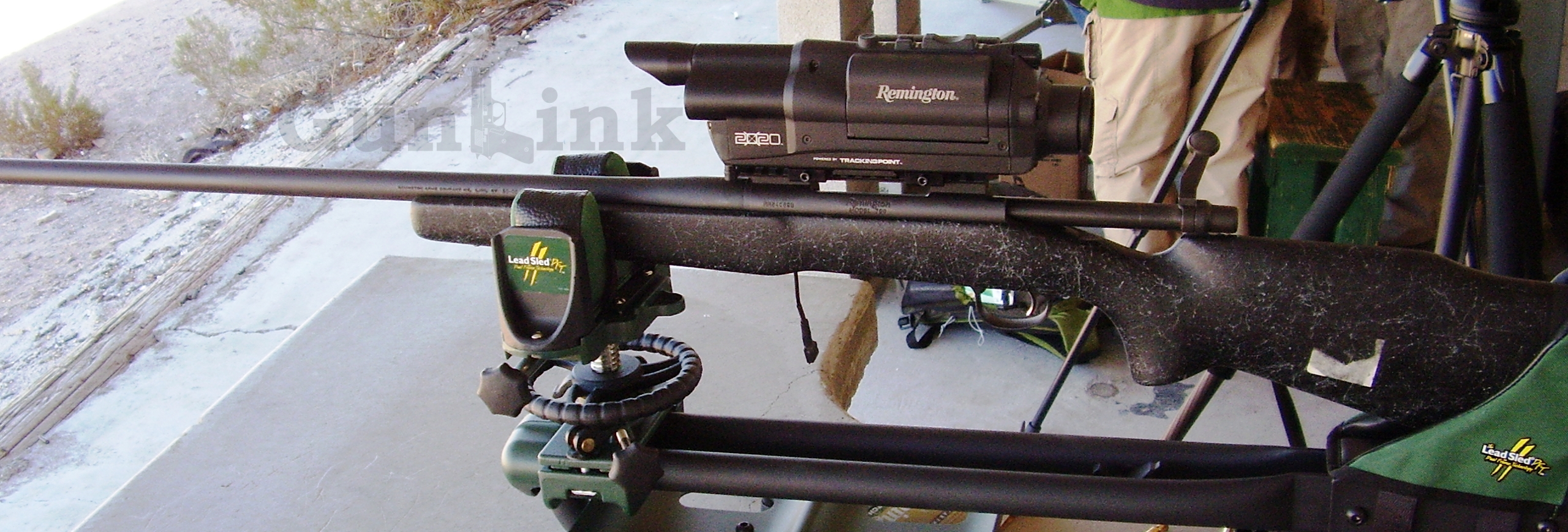 One of the most exciting things we got to see at range day was a pair of siblings from the smart optics family: the Tracking Point Xact system and its little brother, the new Remington 2020 system. Despite getting behind the Tracking Point for some simulation last year, this was my first time sending live rounds downrange with it. Way downrange. We punished the nearly 1000 yard target with the .300 Win Mag version and, since misery loves company, we put a hurting on the 350+ yard target with the .30-06 Remington 700 with the 2020 on top.
The new Remington system uses the same optic/ballistics calculator/range finder/wi-fi server/magic box as the Tracking Point, although not so tightly integrated with the firearm. Despite the device handling the measurements and ballistic computations for the user, it doesn’t have any mechanism for Continue reading